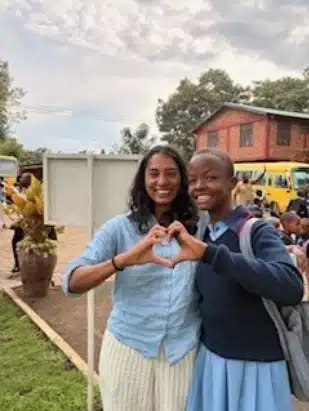
Hearing Beyond Borders: A Humbling Journey in Arusha, Tanzania
Author: Minakshe Nadarajah Victorian Hearing Audiologist
Earlier this year, I had the privilege of volunteering as part of a multidisciplinary health outreach team at the School of St Jude in Arusha, Tanzania. What began as a simple application through a LinkedIn advertisement became one of the most humbling and meaningful experiences of my career.
A team of around 30 healthcare professionals including GPs, paediatricians, nurses and allied health clinicians, most of us travelling from Australia — came together with a shared purpose: to provide essential healthcare to students who would otherwise have limited access to these services. I was the sole audiologist on the team.
From the moment we arrived, we were welcomed with incredible warmth and generosity. Despite having far fewer resources than we are used to in Australia, the positivity, resilience and gratitude of the students and staff were truly inspiring.
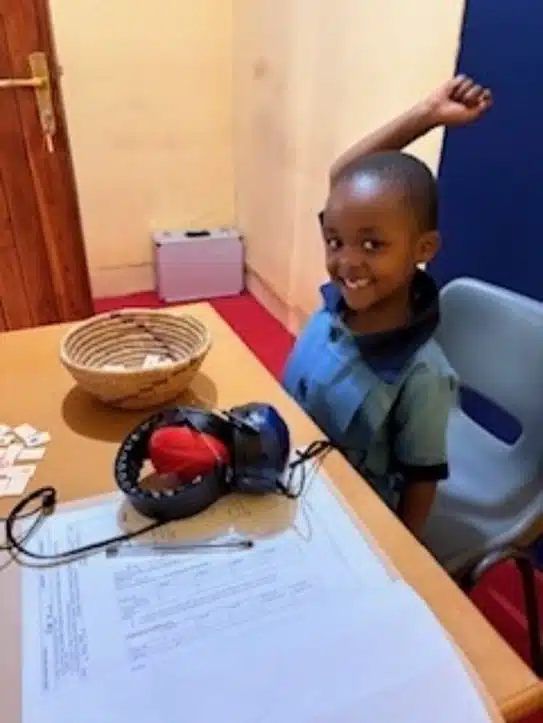
The students brought so much warmth, energy and positivity to every day.
The School of St Jude is a remarkable charity school, established in 2002 by Australian Gemma Sisia, with a mission to fight poverty through education. It provides free, high-quality schooling to around 1,800 students from disadvantaged backgrounds – creating life-changing opportunities through learning. It is truly a remarkable place.
One of the most memorable parts of the experience was the daily routine we quickly settled into. Our days began early, with Tai Chi at 5:30m, a first time for everything! We would then head out for an hour-long walk around the area surrounding the campus. With Mount Meru in our backyard, the views during these early morning walks were incredible, and it was so special to watch the local community slowly come to life in the early hours of the day.
After returning, we would quickly get ready and enjoy a hot breakfast. Then it was time to head into what was always a very busy day of testing at 8:30a.m. We were fortunate to have wonderful helpers assisting us with managing files and organising classrooms in a way that minimised disruption to the school day. Many of these helpers were alumni students who were generously volunteering their time, much like we were.
There were tea breaks throughout the day, although the audiology team often barely had time to stop because of the sheer volume of work we were covering. At lunchtime, we would join the children for a simple meal of rice or ugali – a staple maize flour dish with beans. Sitting with the students was one of the highlights of the day. They were so curious to get to know us, and we loved learning more about them too. If we finished lunch early, there was sometimes time to shoot hoops or kick a ball around with the students, which they absolutely loved!
Our work would continue throughout the afternoon, and once testing finished for the day, we would all spend time entering data. It was a very manual process and often meant our workdays did not finish until around 6pm. Afterwards, we would head to a local watering hole just outside the campus to unwind, enjoy a Kilimanjaro beer, and share stories from the day. Dinner was at 7pm, and most nights we were in bed not long after, exhausted but fulfilled.
The school also organised weekend activities, giving us the chance to experience more of the local culture, food, and vibrant markets. We even managed to squeeze in a safari day – only fitting, given we were in the safari capital of Africa! It truly felt like stepping into a storybook, walking among wild giraffes in their natural habitat.
After the two weeks at the school, I took a short trip to Pemba Island for three days of scuba diving – exactly what I needed after such an intense and rewarding experience. The dive sites were incredible, with crystal-clear waters and vibrant marine life, and being off the grid for a few days gave me the space to reflect on everything we had experienced before heading home.
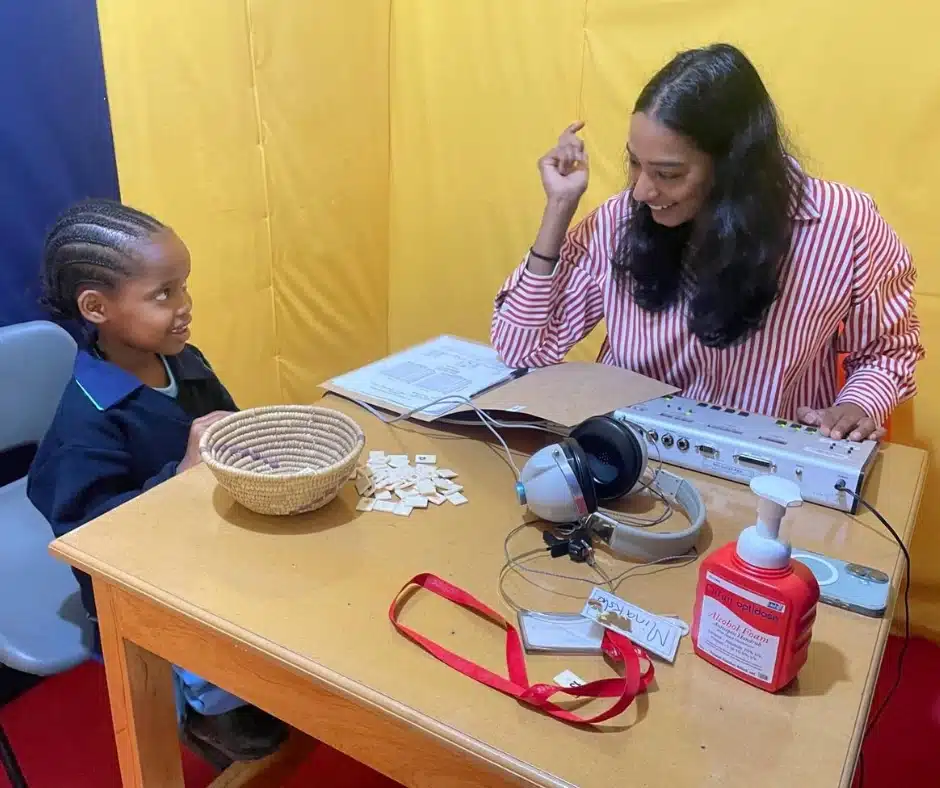
Over two weeks, I conducted hearing assessments for approximately 600 children.
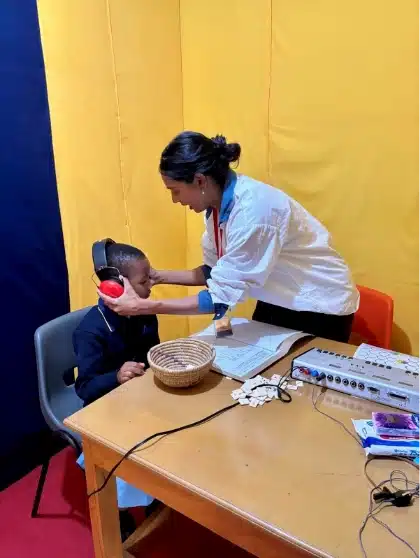
Conducting hearing assessments with students at the school.
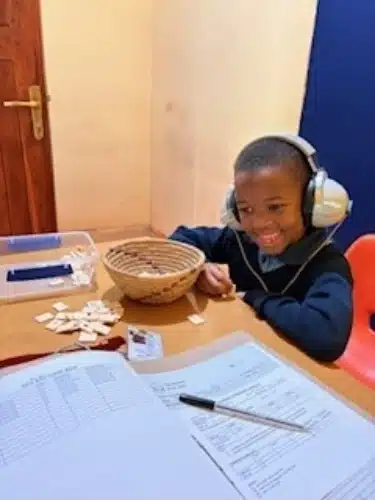
Their first experience with a formal hearing assessment.
This experience was incredibly humbling. It reinforced just how easily access to hearing care can be taken for granted. Many of the children I saw had never had their hearing formally assessed, and some had been quietly managing challenges that affected their ability to fully engage in the classroom.
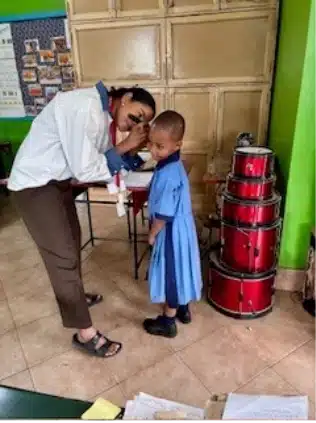
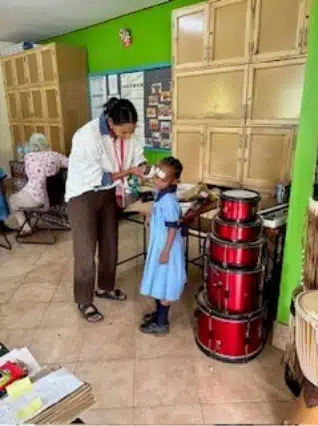
Many of the students were having their first ever hearing assessment.
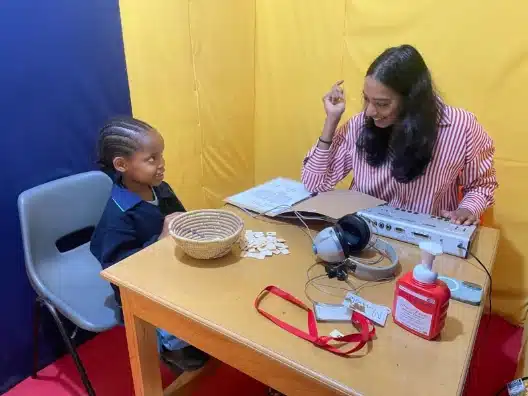
With the generous support of Victorian Hearing, I was able to bring calibrated audiology equipment to carry out thorough and reliable assessments. In a setting where resources are limited, this made an enormous difference – allowing us to identify hearing concerns early and guide the next steps for care.
Working alongside such a dedicated team was equally inspiring. Each of us brought different skills, but we shared a common goal: to ensure every child had the opportunity to thrive.
I have been fortunate to build an ongoing relationship with the school, and I hope to continue supporting them in any way I can – whether that is providing guidance on developing their audiology program or helping source suitable donated hearing aids for students in need. While the school does its best to fund devices through its own support network, access remains a challenge and there is always more that can be done.
Being able to contribute beyond those two weeks is something I am deeply passionate about.
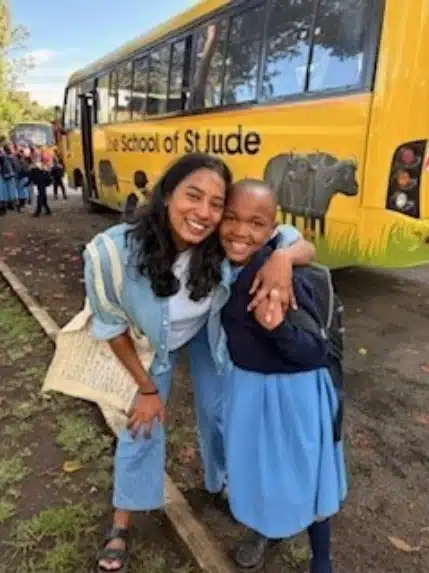
The connections formed with students and staff made the experience especially meaningful.
But perhaps the biggest takeaway for me is this: Whether in Tanzania or here at home, the impact of hearing is universal.
Hearing connects us – to our families, our education, our confidence and our independence. When hearing is reduced, even slightly, it can affect so many aspects of daily life.
This experience has strengthened my commitment to providing the highest level of care to every patient I see at Victorian Hearing. It has also reinforced something I often share: you do not need to wait until hearing becomes a major issue to have it checked.
Early detection leads to better outcomes – at any age.
I feel incredibly grateful to work for an organisation that supports both its clinicians and the communities we serve, locally and globally. The backing of Victorian Hearing made this experience possible, and I am proud to bring that same level of care, compassion and expertise back to my patients here at home.
While the setting in Arusha was very different, the purpose remained exactly the same: To help people hear clearly, communicate confidently and live fully.
If you have been putting off a hearing check, consider this your reminder – your hearing health matters, and support is always available.
With eleven clinics across Melbourne, you’re sure to find a friendly smile and expert support from the dedicated team at Victorian Hearing. Call (03) 9558 8842 or book online.